Tank #2
Tank Endorsement Test | Pennsylvania 2026 #2
Train for FREE with our Pennsylvania tank endorsement practice test online. The official exam test consists of several obligatory parts, with all of them checking your knowledge of different blocks of road rules. If you need to obtain a PA tank license in 2026, practice as much as possible. Free sample tests published on our website will help you check and improve your knowledge and boost your grades. Please bear in mind that DMV requirements for issuing a CDL tank vehicle endorsement may vary from state to state.
20
16
20
1 . If a vehicle gets stuck on a railroad track, the driver should:
Wait in the vehicle for a law enforcement officer to arrive.
If your vehicle gets stuck on railroad tracks, immediately exit the vehicle and get away from the tracks. Check signs or signal housing at the crossing for emergency contact information. Call the emergency contact or call 911.
2 . During an inspection, it is most important to check your tank vehicle for:
Tires.
When inspecting any style of tank, the most important thing for a driver to check for is leaks. Transporting any type of gas or liquid in a leaking tank is illegal.
3 . Which condition increases a tank's stopping distance?
Cloudy weather
Keep in mind how long it will take for your vehicle to come to a complete stop. Empty tank vehicles may take longer to stop than those which are fully loaded.
4 . Bicyclists are:
Not allowed on the roadway.
Bicyclists are considered vehicle operators and, with certain exceptions, must obey the same laws as other traffic. They may ride on the shoulder or berm, but are not required to do so. They may also travel at less than the minimum posted speed limit without being cited for a traffic violation.
5 . A driver should stop after a short distance after changing a tire to:
Ensure that changing one tire did not damage another tire.
After a tire has been changed, you should stop after a short distance to re-check the tightness of the wheel nuts.
6 . The easiest way to recognize that your trailer has begun to skid is to:
Watch the jackknife warning light on the control panel.
The easiest way to spot a trailer skid is to use your mirrors. Any time you brake hard, check your mirrors to ensure that your trailer is still in its proper position.
7 . If you are transporting Class 3 flammable liquids and your cargo needs to be moved into another tank, the flammable liquids:
Should be transferred at night.
Flammable liquids should not be transferred from one vehicle to another on a public roadway, unless being moved due to an emergency. Always warn others of the hazards presented by the materials.
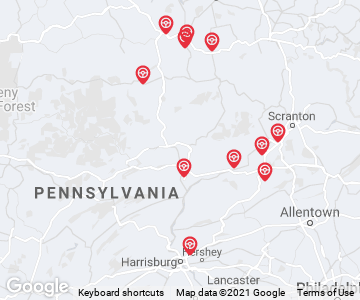
Search the best driving school in your neighbourhood
2026 Pennsylvania | Frequently Asked Questions
To acquire a CDL Tank endorsement in Pennsylvania, you must first have a Commercial Driver's License (CDL). Then, study for the tank endorsement test using the Pennsylvania CDL handbook. Schedule and pass the test at a PennDOT Driver License Center. A passing score is 80% or higher. After passing, pay the required fee to add the endorsement to your CDL.
To obtain a CDL Tank license in Pennsylvania, you need to have a valid Commercial Driver’s License (CDL) first. Then, pass the Tank Vehicle (N) endorsement knowledge test that covers the specific knowledge required for safe operation of tank vehicles, including topics like handling high center of gravity and inspecting tank vehicles.
While Pennsylvania doesn't require specific training or experience for a CDL Tank endorsement, it's recommended to prepare for the knowledge test. This can be done through self-study or enrolling in a training program. Practical experience driving tank vehicles under supervision can also be beneficial. Remember, you must already hold a CDL to add this endorsement.
Yes, to obtain a CDL Tank endorsement in Pennsylvania, you must pass the Tank Vehicle (N) endorsement knowledge test. This written exam focuses on the specific knowledge needed for the safe operation of tank vehicles, including understanding the high center of gravity and how to inspect such vehicles.
The written test for the CDL Tank endorsement covers various subjects including inspecting tank vehicles, understanding the differences between baffled and unbaffled tanks, driving tank vehicles safely, and handling emergencies. It also includes understanding how liquid surge affects vehicle handling. The aim is to ensure drivers can safely handle large, often hazardous, liquid loads.
The CDL Tank endorsement does not typically involve a specific skills or maneuvers assessment. It primarily requires passing a written knowledge test. This test covers subjects like high center of gravity, safe operation, inspecting tank vehicles, and the effects of surge. However, overall CDL skills are assessed during the general CDL road test.
Yes, drivers with a CDL Tank endorsement must adhere to certain rules and regulations. For instance, they must follow all safety protocols for handling and transporting liquid materials. Also, if the tank is not baffled, the vehicle's movement can be affected due to liquid surge. Violation of these rules can lead to penalties or even loss of the CDL Tank endorsement.
No, it is illegal to transport liquid or gas materials in a tank vehicle without a valid CDL Tank endorsement in Pennsylvania. The endorsement ensures that the driver has the necessary knowledge and skills to handle such materials safely. Violating this rule can lead to serious penalties, including fines and loss of commercial driving privileges.
In Pennsylvania, you can add a CDL Tank endorsement to your current commercial driver's license. You do not need to apply for a new license. However, you will have to pass a knowledge test specific to tank vehicles and pay the required fees to add the endorsement to your existing CDL.
Yes, there are specific regulations and prerequisites in place for handling hazardous materials with a CDL Tank endorsement in Pennsylvania. These include passing a written test on hazardous materials, undergoing a background check, and completing a TSA threat assessment. Additionally, drivers must follow federal regulations regarding the transportation, labeling, and placarding of hazardous materials.