Combination #1

Combination Vehicles Practice Test | Washington 2025 #1

Train for FREE online with our Washington CDL combination vehicle test. The official exam test consists of several obligatory parts, with all of them checking your knowledge of different blocks of road rules. If you need to obtain a WA combination license in 2025, practice as much as.. Read More

Train for FREE online with our Washington CDL combination vehicle test. The official exam test consists of several obligatory parts, with all of them checking your knowledge of different blocks of road rules. If you need to obtain a WA combination license in 2025, practice as much as possible. Free sample tests published on our website will help you check and improve your knowledge and boost your grades. Please bear in mind that DMV requirements for issuing a combination license may vary from state to state.

20
16
20
To Pass

1 . When braking with ABS, you should:

When operating a vehicle with an Anti-Lock Braking System (ABS), you should apply your brakes in the same manner as you would if operating a vehicle without ABS.

2 . If you use the trailer hand brake while your trailer is skidding, it will:

If you are experiencing a trailer jackknife, you can help your tires regain traction by releasing the brakes. Using a trailer hand brake while experiencing a skid will only cause the skid to continue.

3 . When glad hands are coupled, the seals should be pressed together at a ____ angle.

When coupling, be sure to couple the proper glad hands. When glad hands are connected, the seals should be pressed together at a 90-degree angle.

4 . If the emergency air line loses pressure:

The emergency air line controls the emergency brakes on a combination vehicle. A loss of air pressure in the emergency line will cause the emergency trailer brakes to activate.

5 . The trailer hand valve should be used:

The trailer hand valve (also referred to as the "trolley valve" or "Johnson bar") works the trailer brakes and should be used only when testing them. Using the trailer hand valve while driving could result in a skid.

6 . All trailers made after ____ must be equipped with Anti-Lock Braking Systems (ABS).

All trailers and converter dollies manufactured on or after March 1, 1998 must have Anti-Lock Braking Systems (ABS).

7 . Older trailers are not equipped with spring brakes. This means that if the air supply for a vehicle's air braking system leaks away:

Older trailers do not have spring brakes. This means that if the air supply in an older trailer's air tank has leaked away, there will be no working brakes connected to the trailer and its wheels will turn freely.

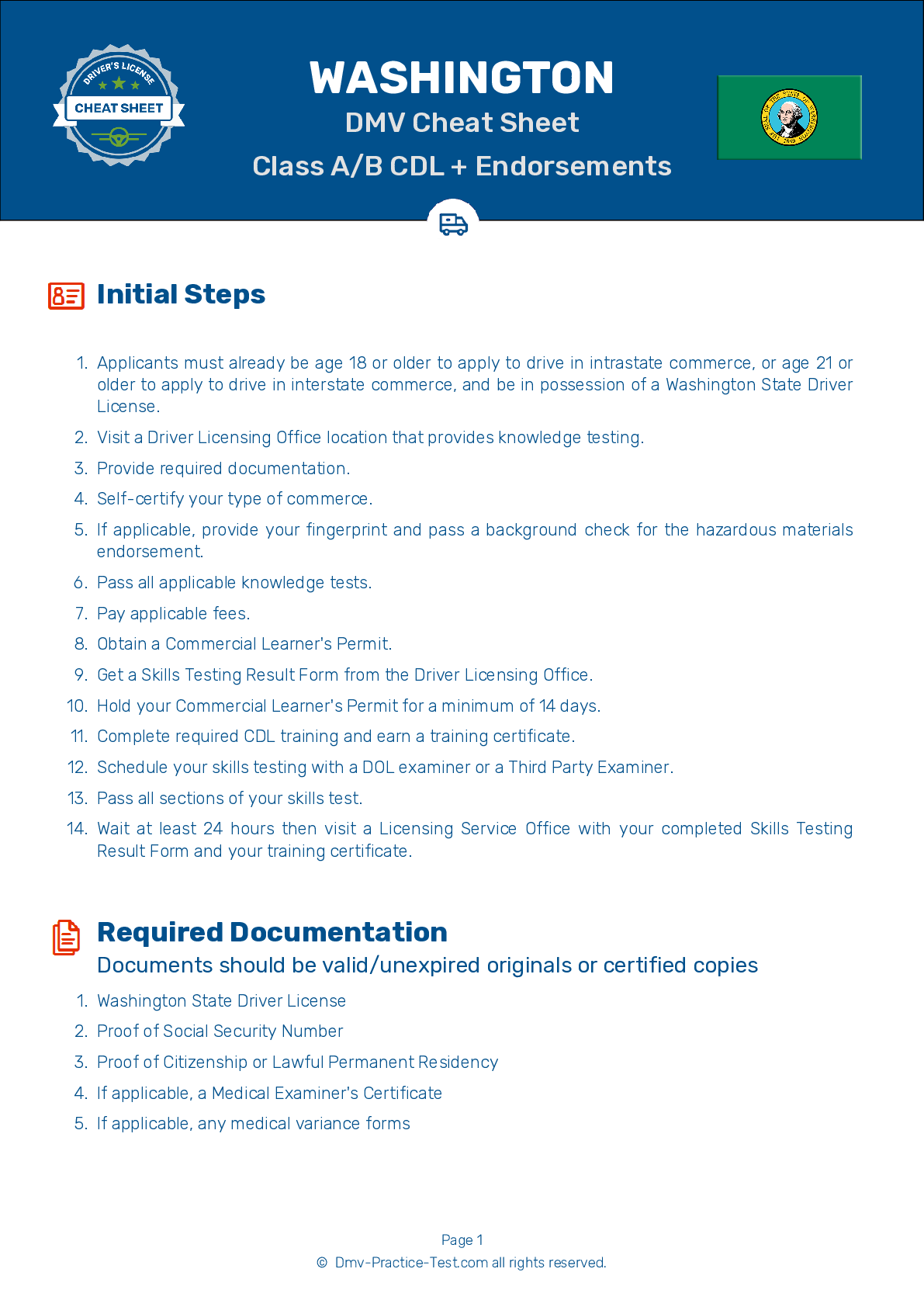
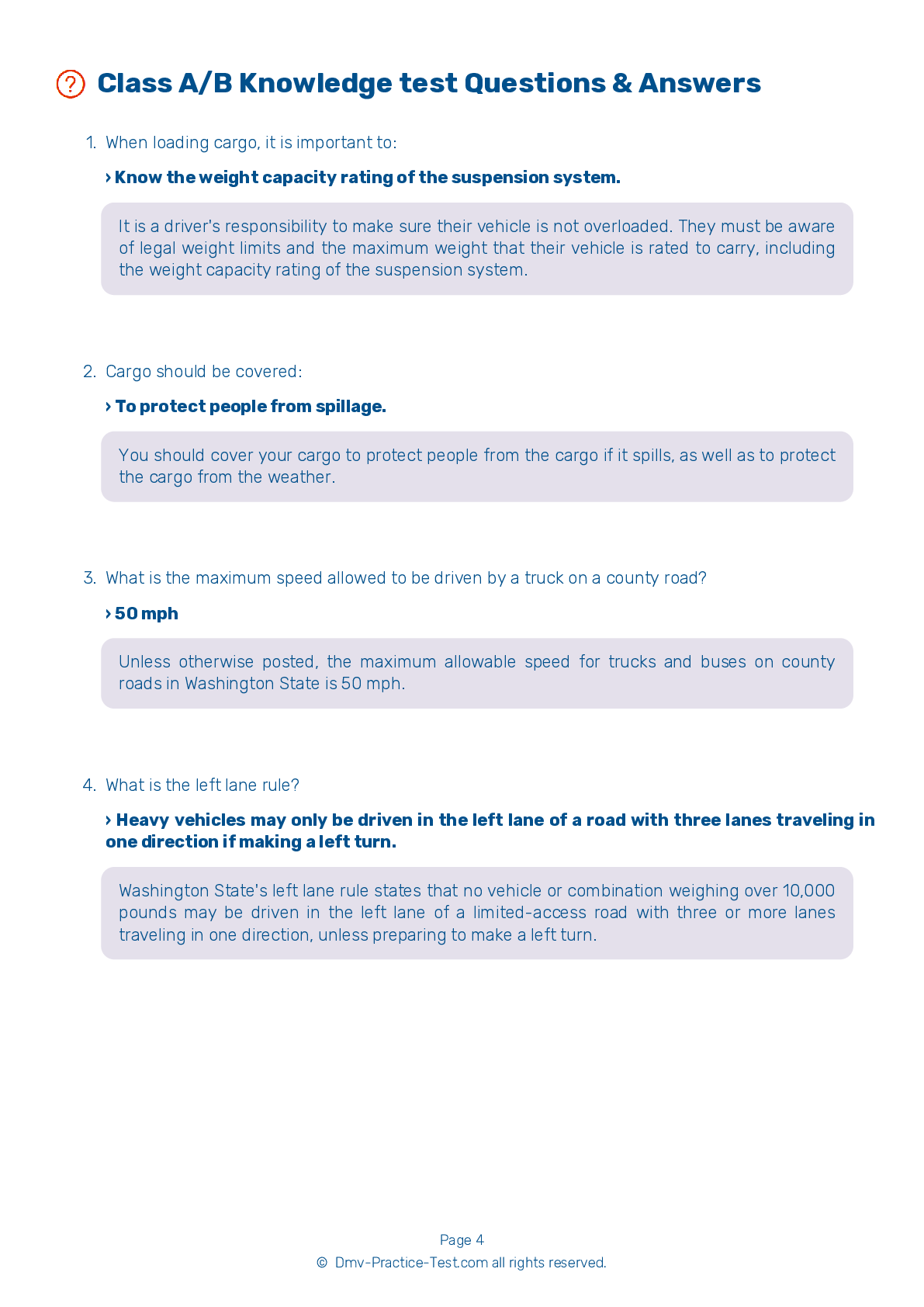
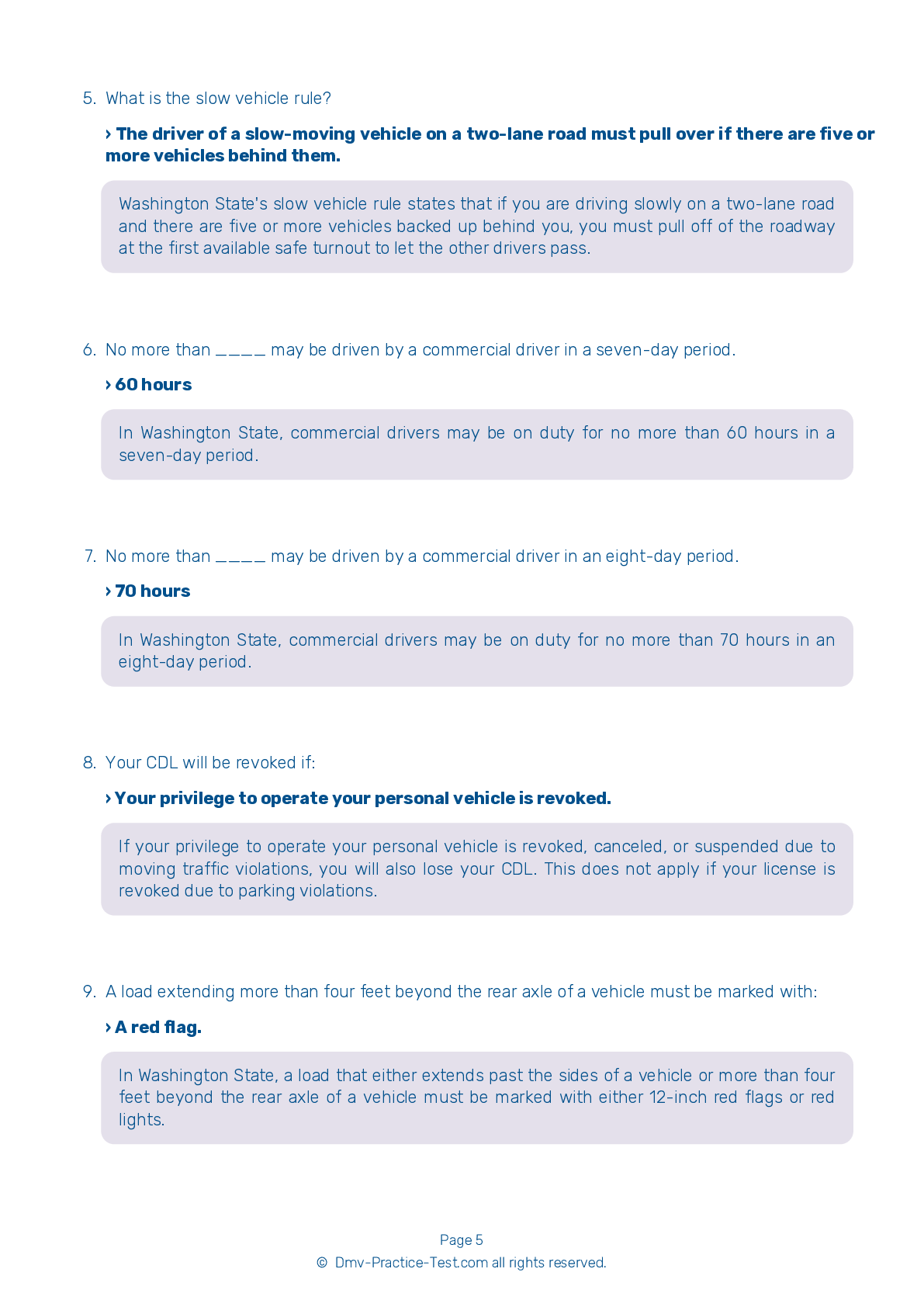
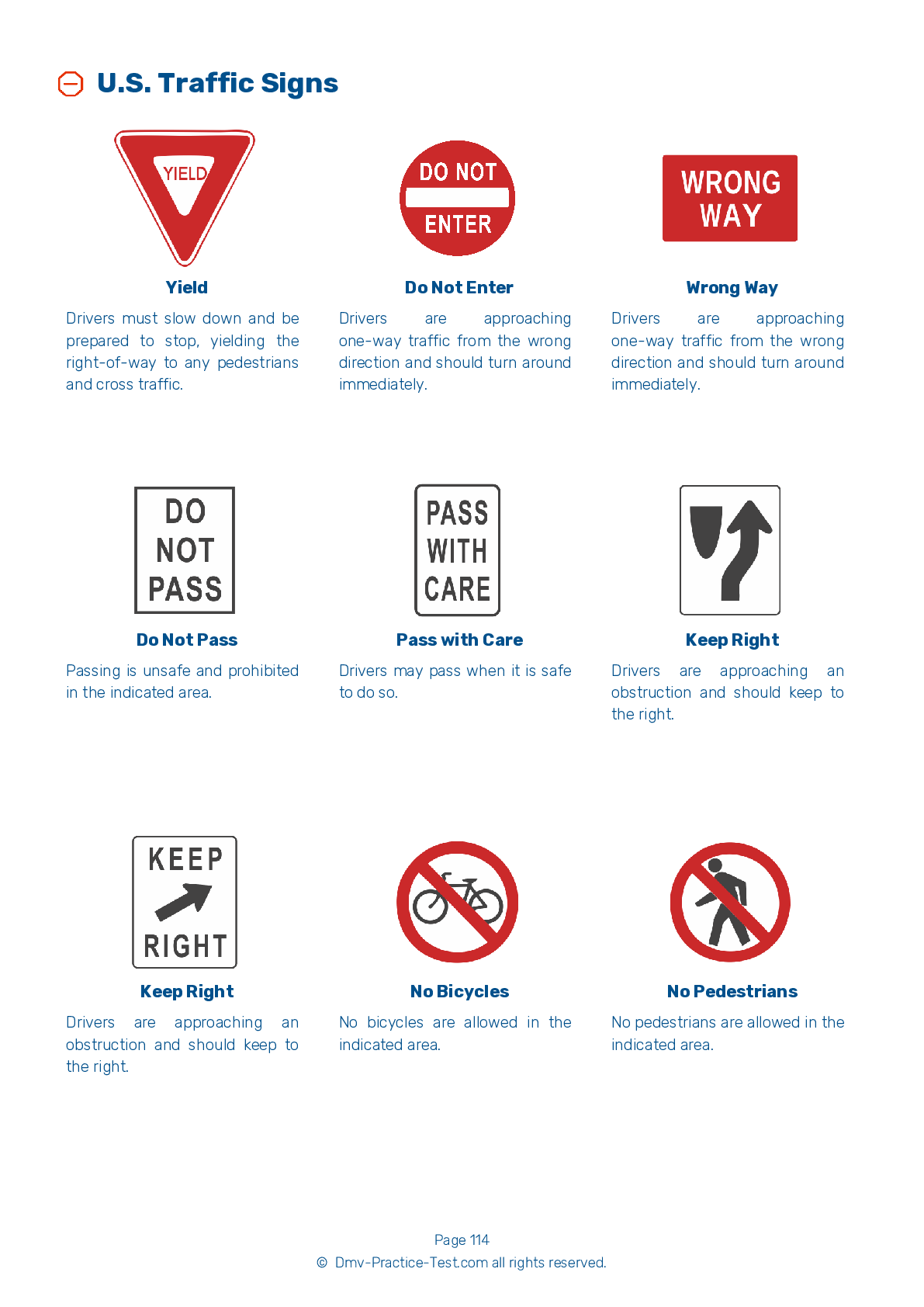
See the exact questions that will be on the 2025 DMV exam.

99.2% of people who use the cheat sheet pass the FIRST TIME

2025 Washington | Frequently Asked Questions

A CDL Class B license in Washington allows the holder to operate single vehicles with a Gross Vehicle Weight Rating (GVWR) of 26,001 or more pounds, or any such vehicle towing another not exceeding 10,000 pounds. This typically includes buses, dump trucks, tow trucks, delivery trucks, and straight trucks.
A Class B CDL license allows you to operate single vehicles with a gross vehicle weight rating (GVWR) of 26,001 pounds or more, or a vehicle of this size towing another not exceeding 10,000 pounds. You can drive buses, dump trucks, tow trucks, delivery trucks, garbage trucks, and straight trucks with this license.
To acquire a Class B CDL license in Washington, applicants must be at least 18 years old (21 if intending to drive interstate), possess a valid Washington state driver's license, pass a vision test, and successfully complete both a knowledge test and skills test. They also must provide proof of U.S. citizenship or lawful permanent residency.
In Washington, you must be at least 18 years old to qualify for a Class B CDL license. However, please note that you must be 21 years old or older if you intend to drive commercial vehicles across state lines (interstate driving).
Specific endorsements aren't necessary for a Class B CDL license, but they can broaden your driving opportunities. Endorsements like H (Hazardous Materials), N (Tank Vehicles), P (Passenger Transport), and S (School Bus) require additional knowledge tests. The T endorsement for double/triple trailers isn't applicable to Class B.
The Class B CDL skills assessment in Washington includes three parts: pre-trip inspection, basic vehicle control, and on-road driving. You'll need to demonstrate knowledge of your vehicle's components, show you can control your vehicle in various situations, and prove you can safely drive in normal traffic conditions.
Yes, Class B CDL license holders in Washington are limited to driving vehicles under 26,001 pounds or towing vehicles that do not exceed 10,000 pounds. They can't operate Class A vehicles unless they upgrade their license. Also, they can't drive vehicles requiring special endorsements unless they pass additional tests.
Yes, in Washington, the written Class B CDL test is available in multiple languages. However, federal regulations require all commercial drivers to read and speak English well enough to converse with the general public, understand traffic signs and signals, respond to official inquiries, and make entries on reports and records.
Yes, in Washington, if you have a disability that requires special accommodations for the Class B CDL written exam, you can request them. Accommodations may include Braille or large print exams, oral exams, or extra time. Be sure to make your request well in advance to allow for arrangements.
Yes, if you don't pass the Class B CDL written test in Washington, you can retake it. However, you must wait at least three days before attempting the test again. You'll need to pay a retesting fee each time. Remember to study thoroughly before retaking to increase your chances of passing.

Wait, before you go

Ace Your Washington CDL Written Test with our Guaranteed Cheat Sheet

See the exact questions that will be on the 2025 Washington DMV exam.