Passenger #1
Passenger Endorsement | California 2026 #1 Page 2 of 3
Train for FREE with our California CDL passenger endorsement practice test online. The official exam test consists of several obligatory parts, with all of them checking your knowledge of different blocks of road rules. If you need to obtain a CA DMV passenger endorsement in 2026, practice as much as possible. Free sample tests published on our website will help you check and improve your knowledge and boost your grades. Please bear in mind that DMV requirements for issuing a CDL permit with passenger endorsement may vary from state to state.
20
17
20
8 . In cool weather, as the temperature begins to rise and ice begins to melt:
As the temperature begins to rise and ice on the road begins to melt, the road surface will often become even more slippery. Water from the slight melting will sit on top of the ice, decreasing the available traction even more. Always decrease your speed and drive with caution when traveling on slippery surfaces.
9 . When starting an engine, oil pressure should come up to a normal level:
Look at your truck's gauges when starting the engine. The oil pressure in an engine should come up to a normal level within seconds of the vehicle's engine being started.
10 . What are placards?
Placards, or signs, are placed on the outside of a vehicle carrying hazardous materials to identify the specific hazard class of the cargo being carried.
11 . When inspecting the interior of a bus, you should:
Not waste time looking at the handrails and floor lining.
When inspecting the interior of a bus, you must make sure everything is safe and in proper working condition. Make sure all signaling devices, such as bathroom emergency buzzers, work properly.
12 . The only way to sober up after consuming alcohol is to:
Most alcohol is removed from the body by the liver, which processes alcohol at a fixed rate. Despite popular belief, techniques like drinking black coffee or taking a cold shower will not accelerate this process. The only thing you can do to become sober after drinking is allow your body the time it needs to eliminate the alcohol from your system.
13 . A tread depth of ____ should be in every major groove of a tire that is not in the front of a commercial motor vehicle.
For safe operation, a commercial motor vehicle needs a tread depth of 4/32 of an inch in every major groove on the front tires, and a tread depth of 2/32 of an inch on other tires.
14 . When driving on packed snow, you should reduce your speed by:
Reduce your speed when traveling on surfaces that provide reduced traction. Reduce your speed by one-half or more when traveling on packed snow.
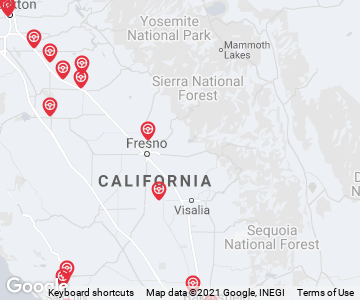
Search the best driving school in your neighbourhood
2026 California | Frequently Asked Questions
In California, a Commercial Driver's License (CDL) Class A license allows the holder to operate any combination of vehicles with a Gross Combination Weight Rating (GCWR) of 26,001 pounds or more, provided the Gross Vehicle Weight Rating (GVWR) of the vehicle(s) being towed exceeds 10,000 pounds. This includes tractor-trailers, truck and trailer combinations, and livestock carriers.
A Class A CDL license in California allows the holder to operate vehicles such as tractor-trailers, truck and trailer combinations, tanker vehicles, livestock carriers, and flatbeds. These are typically vehicles with a Gross Combination Weight Rating (GCWR) of 26,001 pounds or more where the vehicle being towed exceeds 10,000 pounds.
To obtain a Class A CDL license in California, you must be at least 18 years old (21 for interstate driving), have a regular driver's license, pass a vision test, and complete a written knowledge exam. Additionally, you must complete a truck driving training course and pass the CDL skills test, which includes a pre-trip vehicle inspection, a basic control skills test, and an on-road driving examination.
In California, you must be at least 18 years old to apply for a Class A CDL for intrastate transport (within California only). However, to drive across state lines or to carry hazardous materials, you must be at least 21 years old. These age requirements are consistent with federal regulations.
Endorsements for a Class A CDL license are not required but can be beneficial. They allow the license holder to operate special types of vehicles. Common endorsements include H for hazardous materials, T for double/triple trailers, P for passenger vehicles, and N for tank vehicles. Each endorsement requires passing a separate knowledge test.
The Class A CDL skills test in California consists of three parts: a pre-trip vehicle inspection, a basic control skills test, and an on-road driving examination. The pre-trip inspection tests your knowledge about your vehicle and its operation. The basic control skills test assesses your ability to maneuver the vehicle in various situations. The on-road test evaluates your driving skills in traffic.
Class A CDL license holders in California must adhere to various regulations. They're limited to the type of vehicle specified on their license and endorsements. They must follow hours-of-service laws, which regulate driving time to prevent fatigue. Additionally, they're subject to stricter Blood Alcohol Content (BAC) rules, with a limit of 0.04% compared to the standard 0.08%.
Yes, in California, the written Class A CDL test can be taken in languages other than English. The California Department of Motor Vehicles (DMV) offers the test in multiple languages. However, the Federal Motor Carrier Safety Administration requires that all CDL holders understand and read English to ensure road safety.
Yes, you can request accommodations for the Class A CDL written test if you have a disability. The California Department of Motor Vehicles (DMV) provides reasonable testing accommodations under the Americans with Disabilities Act (ADA). You must submit a "Request for Accommodations" form to the DMV detailing your specific needs.
Yes, if you don't pass the Class A CDL written test in California, you can retake it. However, you must wait at least three days before retaking the test. Keep in mind that you'll have to pay a retest fee each time. If you fail three times, you'll need to start the application process over again.